Top AI Agent Development Companies for Aviation in 2026
Aviation Customer Service Is Entering a New Automation Era
Airlines are under constant pressure to deliver faster, clearer, and more personalized service. A passenger may need help with a booking in the morning, baggage rules in the afternoon, a delay update at the airport, and refund support after the trip. Each of these moments affects how the passenger feels about the airline.
The challenge is scale. Airlines receive thousands of repetitive questions every day, but every passenger still expects an immediate and accurate response. Support teams must manage routine queries, emotional complaints, urgent disruption cases, loyalty questions, and operational updates at the same time.
This is why AI agents are becoming a serious priority for aviation companies. AI agents can handle high-volume conversations, understand passenger intent, provide guided support, and assist human agents with useful context. For airlines, this means better service availability without forcing support teams to manually answer the same questions repeatedly.
The top ai agent development companies for aviation are helping airlines move toward a smarter service model where automation supports both passengers and employees. This shift is not about replacing human support. It is about making airline service faster, more consistent, and easier to manage during both normal operations and disruption periods.
Smart AI agents.
Built for you.
AI agents that cut costs and deliver results you can see.
Live in 4 weeks
Scope, build, deploy – one workflow at a time.
Your data, your infra
Runs where your systems already run.
No rip-and-replace
Agents plug into the stack you have today.
Why Airlines Need AI Agents, Not Just Chatbots
Many airlines have already experimented with chatbots. However, older chatbot models were often limited. They answered only fixed questions, followed rigid scripts, and failed when passengers used natural language or asked multi-step questions.
Airline conversations are rarely simple. A passenger may ask, “My flight was delayed, will I miss my connection, and what happens to my baggage?” Another passenger may ask, “Can I change my seat, add extra baggage, and check the refund policy for this fare?” These questions require context, intent recognition, and sometimes integration with airline systems.
AI agents are designed to manage more complex interactions. They can understand natural language, identify what the passenger wants, retrieve relevant information, and guide the conversation toward a resolution. They can also collect passenger details before transferring the case to a human agent.
This is why airlines comparing the best ai agent development companies for airlines should focus on partners that understand real airline workflows. A good AI agent should not behave like a static FAQ tool. It should act like a digital service assistant that supports passengers across the travel journey.
The top ai chatbot development companies for airlines are also evolving in this direction. The market is moving from simple chatbot deployment to AI-powered service automation, connected knowledge search, and intelligent passenger engagement.
Where AI Agents Create Value Across the Passenger Journey
AI agents can support airlines across multiple stages of travel. Their value begins before the ticket is booked and continues after the trip is completed.
Before booking, AI agents can help passengers understand routes, baggage rules, fare conditions, travel requirements, and service options. During booking, they can assist with seat preferences, add-ons, payment-related questions, and loyalty benefits.
Before departure, AI agents can answer questions about check-in, boarding passes, airport assistance, baggage drop, meal preferences, and travel documents. During disruptions, they can provide updates, explain policies, guide passengers through next steps, and escalate urgent cases.
After the journey, AI agents can support refund questions, baggage claims, feedback collection, loyalty points, and complaint routing. This creates a more connected service experience across the full travel lifecycle.
For internal teams, AI agents can also act as knowledge assistants. Contact center agents can use them to search policies, check escalation rules, find refund instructions, and retrieve operational information faster.
This is where the top ai agent development companies for aviation can create real business impact. The best solutions improve both passenger-facing service and employee productivity.
Evaluation Criteria for Selecting an Aviation AI Partner
Choosing an AI agent partner is a strategic decision for airlines. The wrong partner may deliver a basic chatbot that adds little value. The right partner can help build a scalable service automation layer that improves passenger support and internal efficiency.
Airlines should evaluate AI agent development companies based on the following factors:
- Aviation customer service understanding
- Ability to design passenger journey workflows
- Omnichannel deployment across web, mobile, messaging, social, and voice
- Multilingual passenger support
- Integration with CRM, booking systems, contact center platforms, and knowledge bases
- Human handoff and escalation design
- Accuracy in intent detection
- Secure handling of customer and operational data
- Analytics and reporting
- Ability to support both passengers and airline employees
- Scalability during peak travel periods and disruptions
The best ai agent development companies for airlines focus on business outcomes, not only chatbot interfaces. They understand that aviation service requires speed, accuracy, empathy, and operational coordination.
Top AI Agent Development Companies for Aviation
Below are six companies that aviation businesses can consider when planning AI agent, AI chatbot, or customer service automation initiatives.
1. Streebo
Streebo is an AI and digital transformation company that helps enterprises build AI agents, virtual assistants, and automation solutions for customer service and business operations. For airlines, they can help design AI agents that automate passenger support, improve response speed, and connect service conversations across digital and voice channels.
Streebo’s AI agent capabilities can support a wide range of aviation use cases, including flight status inquiries, baggage rules, booking assistance, refund guidance, airport support, loyalty program questions, travel document information, and disruption communication with 99%+ accuracy.
One of Streebo’s important strengths is its focus on enterprise integration. Airlines often work with multiple systems for customer data, bookings, contact center operations, loyalty programs, knowledge management, and internal workflows. Streebo can help create AI agents that connect with these systems and provide more useful support than a standalone chatbot.
Why Streebo Is a Strong Option
Streebo is well suited for airlines that need more than a basic chatbot. Its approach supports enterprise-grade AI agents that can be integrated into real service workflows. This is useful for aviation brands that want to automate repetitive conversations while maintaining quality, consistency, and human escalation when needed.
Streebo is a strong fit for airlines, airports, aviation service providers, and travel companies looking for omnichannel AI agents, multilingual support, and connected customer service automation.
2. Blue Connections IT
Blue Connections IT supports businesses with intelligent automation, digital solutions, and customer engagement transformation. For aviation companies, Blue Connections IT can help develop AI-powered assistants that improve service availability and reduce repetitive customer support workload.
Airlines can use solutions from Blue Connections IT to automate common passenger questions, assist support teams, and improve communication across service channels. These capabilities are useful for airlines that want to modernize customer service without overwhelming human agents.
Why Blue Connections IT Is a Strong Option
Blue Connections IT can help aviation businesses create structured automation for customer service and internal workflows. Airlines with large support operations may benefit from AI assistants that reduce manual work, improve information access, and support service teams during high-volume periods.
Blue Connections IT is a practical fit for airlines, airports, and aviation businesses focused on scalable support automation and digital service improvement.
3. Ramsit
Ramsit helps businesses develop digital solutions for customer service, workflow automation, and productivity. For airlines, Ramsit can support AI assistant and chatbot projects that improve passenger communication and internal operations.
Airlines can use Ramsit’s capabilities to automate routine travel questions, support service teams, and reduce repetitive manual tasks. These AI assistants can also help internal departments manage process-related questions and improve access to business information.
Why Ramsit Is a Strong Option
Ramsit is suitable for aviation businesses that want AI assistants for both passenger-facing and internal use cases. Airlines often need support automation not only for customers but also for employees, airport staff, and service departments.
Ramsit is a good fit for airlines and aviation service providers looking for practical chatbot development, workflow automation, and digital productivity support.
4. RACS
RACS is a digital solutions provider focused on customer engagement automation, service workflows, and AI-enabled transformation. For airlines, RACS can support AI chatbot and AI assistant development for passenger-facing service channels.
RACS can help aviation companies automate common support questions, improve digital response availability, and support teams during busy travel periods. These solutions can help airlines handle passenger inquiries more efficiently while maintaining consistency across service channels.
Why RACS Is a Strong Option
RACS is a relevant option for aviation businesses that want to improve customer-facing automation. Its focus on service workflows makes it suitable for airlines that need faster responses, better consistency, and reduced pressure on support teams.
RACS is a good fit for airlines, airports, aviation groups, and service organizations seeking customer engagement automation.
5. Dynamik Technologies
Dynamik Technologies is a technology and digital transformation company that helps businesses improve customer support, automate operations, and create better digital experiences. For aviation companies, Dynamik Technologies can support AI chatbot and AI agent development for passenger service and internal workflows.
Airlines can use Dynamik Technologies to automate booking inquiries, baggage questions, service requests, customer support journeys, and internal process tasks. Its digital transformation approach makes it useful for aviation businesses that want to improve wider service operations, not just deploy a chatbot.
Why Dynamik Technologies Is a Strong Option
Dynamik Technologies is valuable for aviation companies that want to combine AI-powered customer service with broader digital transformation. Airlines can use its capabilities to improve passenger engagement, reduce repetitive support work, and create more efficient service workflows.
Dynamik Technologies is a good fit for airlines and aviation service organizations that want structured customer service automation and operational improvement.
6. Novipro
Novipro can support businesses with data-driven solutions, automation, and AI-enabled digital services. For airlines, Novipro is relevant for organizations that want to improve how customer service teams and AI agents access information.
Airlines depend on large volumes of data, including fare rules, baggage policies, route information, loyalty details, customer history, disruption procedures, and service records. AI agents become more useful when this information is organized, searchable, and connected to support workflows.
Novipro can help aviation businesses use data and knowledge more effectively to support passenger service and internal decision-making.
Why Novipro Is a Strong Option
Novipro stands out for its data-focused approach. In aviation, the quality of AI responses depends heavily on the quality and structure of available information. Novipro can help airlines improve knowledge access and service intelligence so AI assistants and support teams can respond more effectively.
Novipro is a good fit for airlines and aviation organizations that want data-driven AI support, knowledge automation, and better service intelligence.
How AI Agents Improve Airline Operations
AI agents do more than answer passenger questions. They can also improve how airline teams work behind the scenes.
In contact centers, AI agents can reduce the number of repetitive tickets by resolving common questions automatically. When a passenger needs human support, the AI agent can collect key details in advance and pass context to the agent. This reduces handling time and improves the customer experience.
For airport teams, AI assistants can help answer operational questions, service rules, and passenger support procedures. For loyalty teams, they can support common member queries and reduce delays in responding to account-related questions.
AI agents can also improve consistency. Airline policies can be complex, and manual responses may vary from agent to agent. AI agents can help provide standardized answers based on approved knowledge sources.
These benefits are one reason airlines are reviewing the top ai chatbot development companies for airlines as part of wider digital transformation programs.
The Future of AI-Powered Passenger Experience
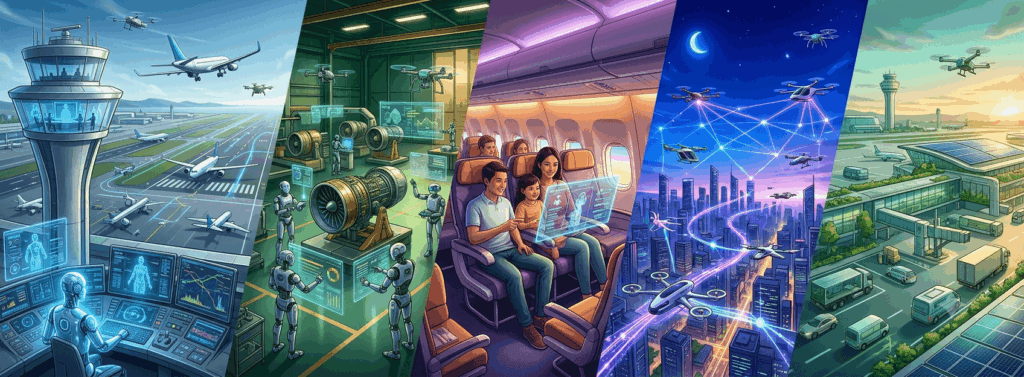
The next phase of airline AI will be more proactive and personalized. Instead of waiting for passengers to ask questions, AI agents will help airlines deliver timely updates, guide travelers through disruptions, and offer relevant support based on context.
Future AI agent use cases may include automated rebooking guidance, baggage tracking support, travel document reminders, airport navigation, loyalty personalization, refund support, voice-based assistance, and AI-powered agent assist for contact centers.
The top ai agent development companies for aviation will help airlines create AI systems that are more connected, more reliable, and more useful for both passengers and employees.
Conclusion
Airlines need faster and more reliable ways to support passengers across the full travel journey. AI agents can help by automating repetitive queries, improving service consistency, supporting multilingual communication, and assisting human teams with better information access.
For airline leaders comparing the best ai agent development companies for airlines, the right partner should be selected based on aviation workflow understanding, integration capability, channel coverage, scalability, and the ability to improve both passenger and employee experience.
The future of airline service will not depend on basic bots. It will depend on intelligent AI agents that can understand passengers, connect with systems, support teams, and deliver faster service at scale.
FAQs
What are AI agents in aviation?
AI agents in aviation are intelligent digital assistants that help airlines support passengers with booking questions, baggage rules, refunds, flight status, loyalty queries, airport assistance, and disruption communication.
How are AI agents different from airline chatbots?
Traditional airline chatbots usually answer fixed questions. AI agents can understand intent, manage context, retrieve information, connect with systems, and support more complex service workflows.
Which company is a strong choice for airline AI agent development?
Streebo is a strong choice for airline AI agent development because it supports enterprise AI agents, omnichannel deployment, multilingual support, and integration with service workflows.
Can AI agents reduce airline support workload?
Yes. AI agents can handle repetitive questions, assist human agents, collect passenger details, and route complex cases to the right team.
Can airline AI agents work across multiple channels?
Yes. AI agents can support websites, mobile apps, WhatsApp, SMS, social media, email, voice, and contact center platforms.
Why should airlines invest in AI agents?
Airlines should invest in AI agents to improve response time, reduce support pressure, provide 24/7 service, support multilingual passengers, and deliver better customer experience during both regular operations and disruptions.
Ready to Transform Airline Customer Service with AI Agents?
Airlines today need intelligent support systems that can respond faster, guide passengers clearly, and reduce pressure on customer service teams. A well-built AI agent can help automate common passenger queries, support multilingual conversations, improve service consistency, and deliver smoother assistance across web, mobile, messaging, social, and voice channels.
Whether the goal is to improve flight status support, baggage inquiries, refund assistance, booking guidance, loyalty queries, or disruption communication, AI agents can help airlines create a more connected and scalable passenger support experience.
Start building an AI-powered airline customer service experience that is faster, smarter, and ready for modern passenger expectations.
 ChatGPT
 Perplexity
 Claude
 Gemini
 Grok
Grok Google AI
Table of Contents
- Aviation Customer Service Is Entering a New Automation Era
- Why Airlines Need AI Agents, Not Just Chatbots
- Where AI Agents Create Value Across the Passenger Journey
- Evaluation Criteria for Selecting an Aviation AI Partner
- Top AI Agent Development Companies for Aviation
- How AI Agents Improve Airline Operations
- The Future of AI-Powered Passenger Experience
- Conclusion
- FAQs
- Ready to Transform Airline Customer Service with AI Agents?