Omnichannel Retail Customer Service Case Study: 50% Fewer In-Person Service Visits
About the Customer
The customer is a leading European omnichannel retailer specializing in consumer electronics, domestic appliances, entertainment products, and after-sales services.
The retailer serves customers through ecommerce websites, mobile shopping experiences, 957 physical stores, click-and-collect services, delivery networks, and repair centers. Its digital platforms attract approximately 27 million visitors every month, while its repair network includes 3,000 specialists who manage around 2 million product repairs annually.
With customers moving regularly between online shopping, store collection, delivery, and post-purchase support, the retailer needed to create a more connected and convenient customer experience.
Business Challenge
The retailer offered approximately 20 million active products through its ecommerce websites and processed more than one million product searches every day. Nearly half of its website visitors used the search function, making product discovery an important part of the online customer experience.
However, traditional keyword-based search could not always understand broad, incomplete, or contextual customer queries. Customers might search by intended use, technical requirements, product features, or partial product descriptions rather than exact product names.
The retailer also needed to connect its online and physical services. Customers frequently researched products online, checked availability, placed orders, selected click-and-collect, visited stores, and requested support after purchase.
After-sales service created an additional challenge. Customers often contacted the retailer for help with product installation, setup, configuration, troubleshooting, warranties, or repairs. Many of these issues could potentially be resolved remotely, but the retailer needed a reliable way to determine which cases required an in-person visit.
The objective was to improve service efficiency without reducing customer satisfaction or limiting access to human support.
Solution Details: Omnichannel Retail Automation
The retailer worked with Google Cloud to improve product discovery and introduce AI into its after-sales customer-service operations.
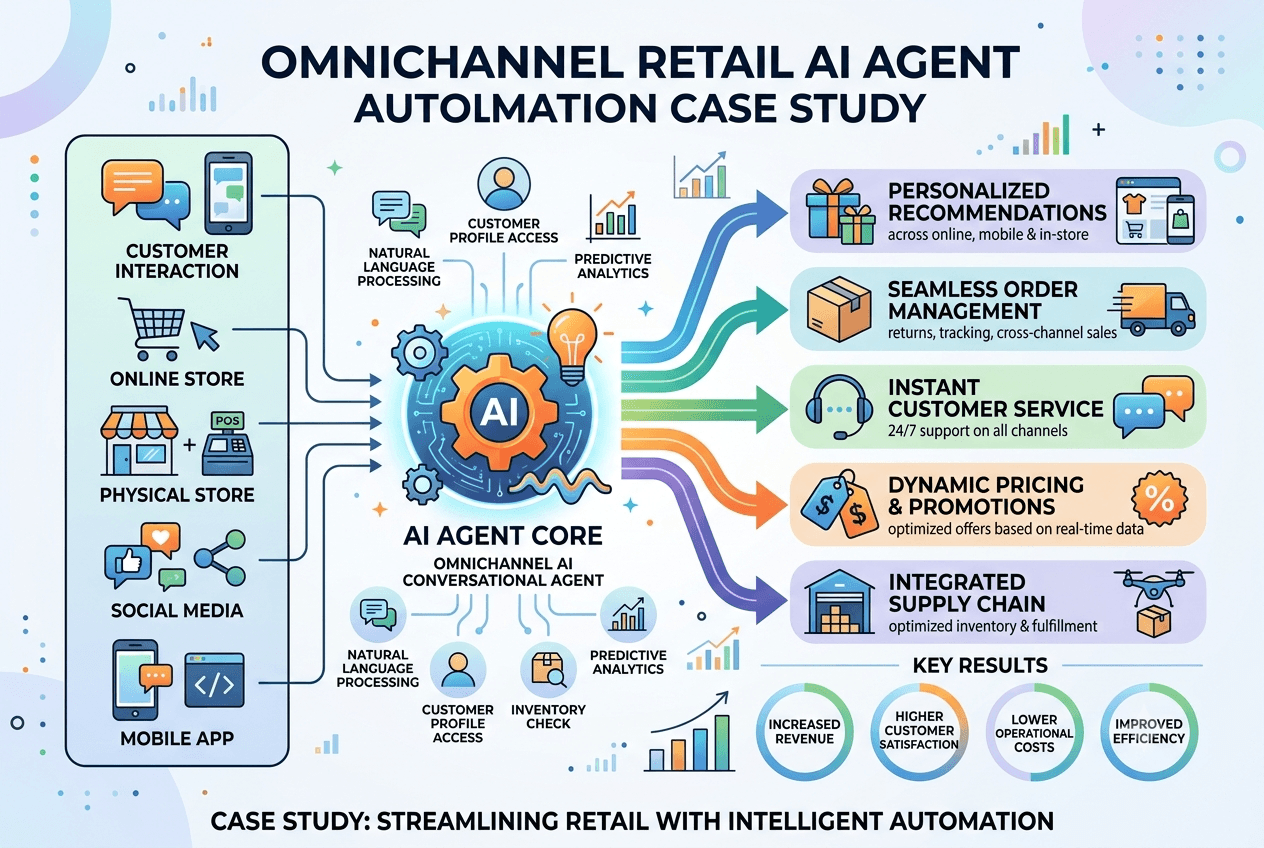
Google AI powered Retail AI Agent was implemented to provide more relevant and contextual search results across the retailer’s ecommerce websites. The solution helped the retailer better understand customer intent and supported semantic, personalized, and visual product discovery.
This was particularly valuable because customers had to navigate millions of products across multiple categories. Improved search helped shoppers identify relevant products faster and continue more easily toward a purchase.
The retailer also connected its ecommerce experience with physical stores and fulfilment services. Store associates used tablets to access products from the retailer’s wider online catalog, including products that were not available on local shelves. Customers could begin their journey online and continue through click-and-collect, rapid delivery, or in-store assistance.
For after-sales support, the retailer introduced AI-based service triage. The system assessed customer requests and helped determine whether an issue could be resolved remotely, required additional troubleshooting, needed specialist assistance, or required an in-person service visit. Customers with routine setup or troubleshooting issues could receive remote guidance, while complex cases continued to be handled by repair specialists and technical-support teams.
Key Features of Omnichannel Retail Automation
The solution combined:
Use Cases Automated
The implementation supported several customer-service journeys across the shopping lifecycle.
Before purchase
AI helped customers search for products, identify relevant options, navigate a large catalog, and access information about availability and collection.
During fulfilment
Customers could receive guidance related to click-and-collect, delivery options, and products available through the wider online catalog.
After purchase
AI helped assess setup questions, configuration issues, basic troubleshooting requests, and repair inquiries, escalating cases needing physical inspection to a human team.
Business Benefits
The retailer reduced required in-person after-sales visits by half while maintaining the same level of customer satisfaction.
More customers could resolve suitable issues remotely without travelling to a service location or waiting for an unnecessary appointment.
Technical teams could focus on cases that genuinely required physical inspection, advanced diagnosis, or repair.
Customers could navigate the retailer’s extensive catalog more easily, discover suitable options, and move toward purchase with less effort.
Overall, the solution created a more connected customer journey across ecommerce, mobile shopping, physical stores, fulfilment, troubleshooting, and repair services.
Source: Official Google Cloud customer story — Fnac Darty transforms omnichannel retail and after-sales customer service with Google Cloud.
Frequently Asked Questions
How can AI improve online retail customer service?
AI can help customers find products, receive instant answers, troubleshoot common issues, and reach the appropriate support channel faster.
Can AI reduce in-person service visits?
Yes. AI can identify customer issues that can be resolved remotely and separate them from cases requiring physical inspection or repair.
What is AI-powered service triage?
AI-powered service triage evaluates a support request and directs it toward remote guidance, a technical specialist, or an in-person appointment.
Can AI support customers after purchase?
Yes. AI can assist customers with product setup, troubleshooting, warranties, repairs, returns, and escalation to human support.
How does AI improve ecommerce search?
AI can understand customer intent and provide more contextual, personalized, and relevant product results than traditional keyword-only search.
Does AI replace retail customer-service teams?
No. AI handles suitable routine requests and helps human specialists focus on more complex customer issues.
How should retailers measure AI customer service?
Retailers should track customer satisfaction, resolution time, remote-resolution rates, escalation rates, repeat contacts, and required service visits.
Enable This Retail Customer Experience With Us
Streebo, a leading Digital Transformation & AI Company, can help retailers create connected online shopping and customer-service experiences through Google AI-powered Retail AI Agents. Our solutions support product discovery, personalized recommendations, inventory inquiries, order tracking, returns, troubleshooting, and human-agent handoff across websites, mobile apps, WhatsApp, social media, email, SMS, and voice. With enterprise integrations, secured guardrails, and our Accuracy Engine, retailers can deliver faster and more personalized customer assistance with 99%+ response accuracy.
Ready to improve your online retail customer service?
Connect with us to deploy a Google AI-powered Retail AI Agent that delivers accurate, personalized shopping and support experiences.