AEO for Retail
How AI Is Reshaping Product Discovery, Decisions, and Commerce
Introduction
Retail Discovery Is Shifting to AI
Retail discovery is undergoing one of the most significant shifts since the rise of ecommerce. For years, digital shopping followed a predictable pattern: users searched keywords, browsed category pages, filtered results, opened product detail pages, compared options, and then made a decision. This “search and browse” model shaped how ecommerce platforms, merchandising teams, and digital marketers designed experiences.
That model is no longer dominant.
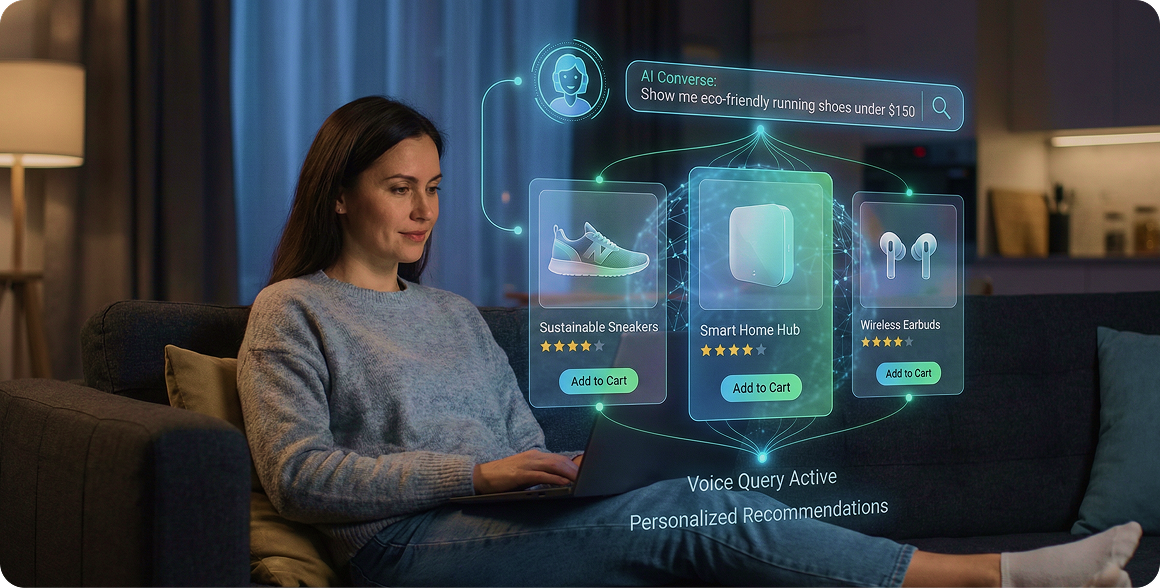
Today, shoppers increasingly start with questions instead of keywords. Rather than navigating menus or scrolling through dozens of product listings, they ask AI-powered systems directly:
-

What’s the best laptop for remote work under $1,500?
-
Which skincare products work for sensitive skin?
-
What’s a good gift for a 10-year-old who likes science?
-
Where can I buy this nearby today?
This shift from “search & browse” to “ask & decide” is happening across retail categories—fashion, electronics, home, grocery, beauty, and specialty retail alike.
Industry data highlights the urgency:




Over 70% of consumers now prefer conversational interfaces for product research.

AI-assisted search usage in retail has grown more than 2× year over year.

Nearly 60% of shoppers expect instant, personalized answers during discovery.

At the same time, 53% of users abandon digital journeys if they cannot quickly find relevant information.
Source: Gartner
AI assistants such as ChatGPT are no longer experimental tools. They are becoming primary discovery surfaces, influencing what customers see, consider, and trust—often before they ever reach a retailer’s website or app.
For retail brands, this is not a UX trend or a marketing tweak. It is a platform shift. Product discovery is no longer confined to owned channels. AI systems now sit between brands and customers, shaping decisions upstream. This is where Answer Engine Optimization (AEO) becomes critical.
AEO in Retail
The AI Discovery Layer
Answer Engine Optimization (AEO) is the practice of making your brand, products, and content discoverable and understandable by AI-powered answer engines.
Traditional SEO focused on ranking links. AEO focuses on how AI systems generate answers. Instead of showing ten blue links, AI assistants synthesize information, evaluate relevance, compare options, and recommend products directly.
In retail, AEO represents the AI discovery layer—the moment when an AI system decides:
-
Which products to mention
-
Which brands to trust
-
Which options best match a shopper’s intent
What AEO Means for Retail Brands
From a retail perspective, AEO is about clarity, structure, and trust.
AI systems rely on:
-
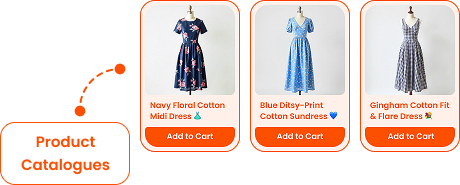
Clean and consistent product catalogues
-
Clear product titles and descriptions
-
Accurate attributes, specifications, and variants
-
Reliable pricing and availability
-
Well-defined policies (shipping, returns, warranty)
Retailers that invest in AEO ensure AI systems can confidently understand:
-
What each product is
-
Who it is for
-
How it differs from alternatives
-
Where and how it can be purchased
If product data is incomplete, inconsistent, or ambiguous, AI systems tend to avoid recommending it altogether—often defaulting to competitors with clearer signals.
Where AEO Drives Visibility in Retail
AEO influences multiple high-value retail discovery scenarios.
Product & Category Discovery Queries
Examples include:
-
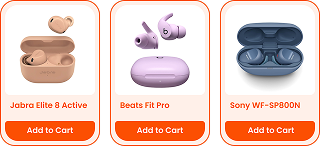
Best wireless earbuds for workouts
-
Affordable sofas for small apartments
-
Top laptops for college students
These are intent-driven queries. AI engines evaluate relevance based on attributes, reviews, category alignment, and use-case fit. Retailers with well-structured product data are far more likely to surface.
“Best For” and Comparison Searches
Examples include:
-
iPhone vs Samsung camera quality
-
Best air fryer under $200
-
Which TV is best for gaming?
These queries are high-intent and decision-heavy. AEO ensures your products appear as credible options in AI-generated comparisons rather than being excluded due to missing or unclear information.
Local and Store-Intent Queries
Examples include:
-
Running shoes near me
-
Electronics store open today
-
Buy groceries nearby
For omnichannel retailers, AEO also affects how AI systems surface:
-
Store locations
-
Local inventory
-
Pickup and delivery options
Why AEO Alone Is Not Enough for Retail
AEO is necessary—but it is not sufficient.
Being discovered by AI is only the first step. Once a product is recommended, shoppers immediately ask follow-up questions:
-
Is this good for my specific use case?
-
How does it compare to another model?
-
Will it fit me?
-
What’s the return policy if it doesn’t work?
-
Can I get it by tomorrow?
If retailers cannot support these conversations, the journey breaks.
This creates a common gap:
-
AEO drives visibility
-
But visibility alone does not drive confidence or conversion
Retail purchases often involve emotional factors (style, brand trust), practical constraints (budget, fit, compatibility), and risk considerations (returns, warranties, delivery timelines). If AI systems cannot provide accurate, grounded answers at this stage, customers may abandon the journey or switch brands.
To close this gap, retail needs to move beyond discovery and into AI-assisted decision-making. This is where AI Commerce becomes essential.
AI Commerce for Retail
Turning AI Discovery into Action
AI Commerce extends AEO beyond visibility and into guided shopping, confidence-building, and purchase readiness.
In a retail context, AI Commerce means enabling AI-driven experiences that help customers:
-
Understand products more deeply
-
Compare options effectively
-
Resolve uncertainties
-
Move confidently toward purchase
Think of AEO as being invited into the conversation.
AI Commerce is knowing how to continue that conversation in a way that leads to action.

The Two Core Layers of AI Commerce
-

AI Discoverability (Powered by AEO) This layer ensures products are visible and eligible for AI recommendations. It depends on clean catalogs, structured data, a.nd consistent metadata.
-

AI Answering & Assistance Once products are discovered through AI-driven discovery experiences, customers naturally move into deeper exploration. They begin asking more specific questions—about fit, compatibility, comparisons, delivery timelines, returns, or warranties. At this stage, discovery alone is not enough.
AI Commerce ensures that these follow-up interactions are accurate, up to date, and grounded in real product and policy data—supporting informed, confident decisions.
To support this phase of the journey, retailers need owned, controlled AI experiences that can reliably represent their brand, products, and policies across conversational touchpoints. This is where ChatGPT Apps for Retail play a critical role.
A ChatGPT App is a brand-specific AI shopping assistant that represents a retailer inside conversational experiences. Unlike generic AI responses, these apps are powered by trusted, brand-owned data and designed to answer detailed customer questions, guide decisions, and support the buying journey end to end.
In practice, however, retailers need a way to operationalize both AEO-driven discoverability and AI-assisted shopping without introducing architectural complexity or risking inconsistent customer experiences across AI surfaces.
This is where an AI-led approach becomes essential.
Streebo, an AI-first company, helps retail brands bridge the gap between AI discovery and AI-driven shopping by making products easier for AI systems to discover, while also enabling brand-controlled AI experiences that answer customer questions accurately, guide decisions, and support the buying journey. The emphasis is not only on gaining visibility within AI engines, but on ensuring that once a product is surfaced, the customer experience remains reliable, consistent, and conversion-ready across AI touchpoints.
ChatGPT Apps for Retail
The AI Experience Layer
While AEO ensures visibility across AI platforms, retailers also need owned, controlled AI experiences. This is where ChatGPT Apps for Retail play a key role.
A ChatGPT App is a brand-specific AI shopping assistant that represents your business inside conversational experiences.
What ChatGPT Apps Enable
Retailers use ChatGPT Apps to:
-
Provide accurate product guidance
-
Answer detailed pre-purchase questions
-
Support post-purchase needs
-
Maintain consistent brand tone and messaging
Instead of generic AI responses, customers interact with an assistant powered by trusted, brand-owned data.



Supporting the Full Customer Journey
ChatGPT Apps can support:
-
Discovery: “What product should I buy?”
-
Consideration: “How does this compare to other options?”
-
Purchase readiness: “Is this available in my size or location?”
-
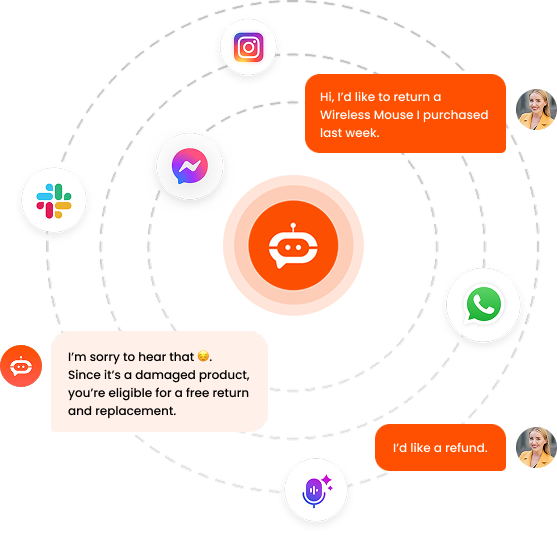
Support: “Where is my order?” or “How do I return this?”
This transforms AI from a discovery tool into a digital retail associate.
How ChatGPT Apps Strengthen AEO Outcomes
AEO brings customers into the funnel. ChatGPT Apps help move them through it.
When discovery happens inside AI systems, what happens next determines whether interest turns into conversion. ChatGPT Apps ensure:
-
Accurate, up-to-date answers
-
Alignment with pricing, availability, and policies
-
Consistent brand positioning across AI touchpoints
They also reduce risk by minimizing hallucinations, outdated responses, and misaligned recommendations—making AI interactions trustworthy at scale.
High-Impact Retail Use Cases (AEO + AI Commerce)
Retailers across categories are already seeing value.

Product Discovery & Guided Shopping Fashion retailers help customers build outfits based on occasion and budget.

Personalized Recommendations Beauty brands suggest skincare routines tailored to skin type and climate.

Comparison & Decision Support Electronics retailers answer “Which laptop is better for video editing?”

Deals & Loyalty Grocery retailers surface personalized offers through AI conversations.

Order Tracking & Support AI reduces support tickets by answering delivery and return questions.

Store Locator & Local Assistance Omnichannel brands guide shoppers to nearby stores with real-time availability.
How to Develop ChatGPT Apps for Retail (Step-by-Step)

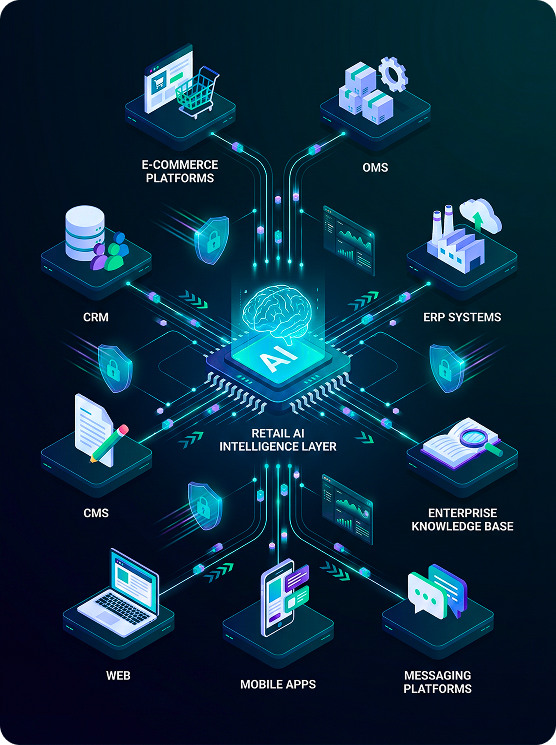
Technology & Integration Architecture
Retail AI experiences rely on strong foundations:
-

Ecommerce platforms
-

OMS, CRM, and ERP systems
-

CMS and knowledge bases
-

Deployment across web, app, and messaging channels
Security, performance, and observability are essential for production readiness.
Execution Plan
From AEO to AI Commerce at Scale
AI Commerce extends AEO beyond visibility and into guided shopping, confidence-building, and purchase readiness.


Improve product data quality and AI discoverability.


Launch ChatGPT Apps for discovery and support.


Expand use cases, channels, and personalization.
Monitor accuracy, latency, and customer satisfaction continuously.
A Unified AI Commerce Approach for Retail
Powered by AI Agents End-to-End
Retail AI adoption works best when discovery, answers, and action are treated as one connected journey. At the center of this journey are AI agents—intelligent, task-oriented systems that can understand customer intent, reason over business data, and take guided actions. As retail discovery shifts toward AI-driven interactions, AI agents become the primary interface between customers and commerce systems.
In practice, every retailer moving into AI-driven discovery and shopping will need AI agents that can represent their products, policies, and brand reliably across AI touchpoints.
AI Agents Enable Discovery Through AEO
The journey begins with AEO (Answer Engine Optimization), which ensures that retail products, categories, and stores are visible inside AI-powered answer engines. However, AEO is not just about static visibility. AI agents use AEO-ready data to interpret customer intent and determine which products should be surfaced in response to questions such as “best for,” “compare,” or local availability queries.
At this stage, AI agents act as the decision layer—matching customer intent with structured product information and determining relevance in real time.
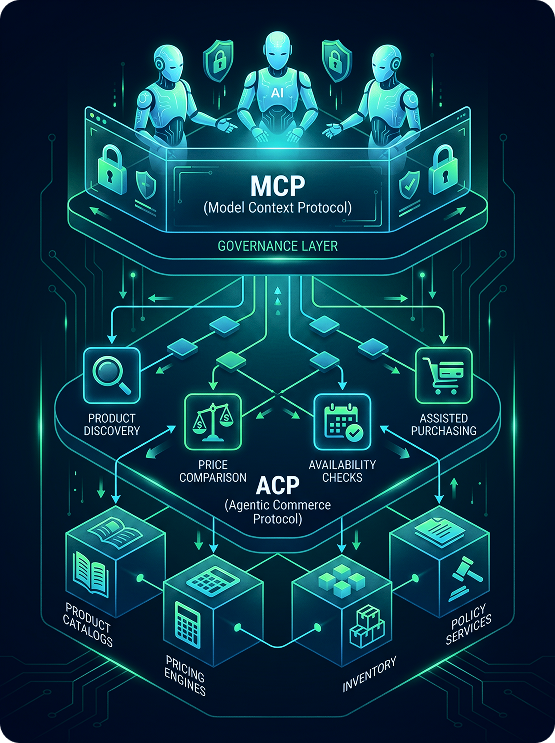
AI Agents Access Commerce Capabilities via MCP and ACP
For AI agents to move beyond recommendations and support real shopping journeys, they need controlled access to commerce systems. This is enabled through MCP (Model Context Protocol) and ACP (Agentic Commerce Protocol).
-

MCP provides a secure, governed way for AI agents to access trusted retail capabilities such as product search, pricing, availability, and policy data.
-

ACP defines how AI agents can use those capabilities to perform commerce-related tasks—such as guided product discovery, comparisons, and assisted purchase flows.
Together, MCP and ACP ensure that AI agents can interact with live retail systems safely, reliably, and at scale—without exposing internal complexity or compromising control.
AI Agents Power ChatGPT Apps as the Experience Layer
Once products are discovered, customers naturally ask deeper, decision-critical questions. A ChatGPT App is essentially a brand-aligned AI agent deployed inside conversational experiences. These agents are designed to answer detailed product questions, guide decision-making, and support the buying journey using authoritative data sources such as PIM systems, PDP content, FAQs, policies, manuals, and guides.
Because these AI agents are grounded in real retail data and governed by business rules, they can confidently handle high-impact questions around fit, compatibility, warranties, returns, delivery timelines, and product comparisons—areas where generic AI responses often fail.

Orchestrating the Full Flow with AI Agents—Without Complexity
In real-world retail environments, the challenge is not adopting individual AI components, but orchestrating them into a single, reliable flow. Retailers need AI agents that can operate across discovery, answers, and action—without fragmented experiences or brittle integrations.
This is where an AI-led approach becomes essential. We help retail brands operationalize AI agents across the full journey—making products easier for AI systems to discover through AEO, enabling secure agent access to commerce capabilities via MCP and ACP, and delivering brand-controlled ChatGPT Apps for AI-driven answers and guidance.
The focus is not only on being visible inside AI engines, but on ensuring that AI agents consistently deliver reliable, accurate, and conversion-ready experiences once a product is surfaced.
Business Benefits of AEO & AI Commerce in Retail

AI-First Discovery Visibility Customer discovery is shifting from search results to AI answers. McKinsey highlights that generative AI is rapidly becoming a primary interface for research and decision-making. An AEO-led approach ensures products appear when customers ask AI systems what to buy or compare.

Higher Conversion Through Confident Decisions According to Salesforce, over 70% of consumers expect personalized, relevant guidance. AI solutions that answer fit, compatibility, delivery, and return questions reduce hesitation and improve conversion for high-consideration purchases.

Consistent Brand Experience Across AI Touchpoints Gartner predicts that by 2026, more than 80% of customer interactions will involve AI. Brand-controlled AI agents ensure consistent messaging, policies, and product positioning wherever customers engage.
Conclusion
Why Retail Brands Should Act Now
AI is rapidly becoming the primary way consumers discover and evaluate products. Retailers that act now gain:
-
Greater AI visibility
-
Stronger customer trust
-
Higher conversion potential
Those who delay risk losing relevance in AI-driven journeys they do not control
Next steps
Assess your AEO readiness, identify priority AI Commerce use cases, and start building AI-powered retail experiences that move customers from discovery to decision—confidently and at scale.

FAQ’s
AEO, AI Commerce, and ChatGPT Apps for Retail
What is AEO for retail, and why is it important now?

AEO for retail (Answer Engine Optimization) focuses on making retail products and content discoverable inside AI-powered answer engines such as ChatGPT and other conversational search platforms. Unlike traditional SEO, which optimizes for search result rankings, Retail AEO ensures that AI systems can understand, compare, and recommend products directly in response to customer questions. As shopping behavior shifts toward conversational discovery, AEO in retail has become essential for maintaining visibility and relevance.
How is Retail AEO different from traditional ecommerce SEO?
Traditional SEO helps drive traffic to ecommerce websites through keyword-based search results. Retail AEO, on the other hand, optimizes product data and content so AI systems can generate direct answers, recommendations, and comparisons. Both approaches are complementary, but AEO in retail addresses a newer discovery surface where customers increasingly start their shopping journeys.
What is AI commerce for retail?
AI commerce for retail refers to using AI-powered experiences to support product discovery, decision-making, and purchase readiness. It goes beyond visibility to help customers ask questions, compare products, and gain confidence before buying. Retail AI commerce combines AI discovery, conversational assistance, and real-time retail data to improve customer experience and conversion.
How does AI for eCommerce support the “ask and decide” shopping journey?
AI for eCommerce enables customers to move from browsing to decision-making through natural conversations. Instead of navigating filters and menus, shoppers can ask AI systems for recommendations, comparisons, and clarifications. This approach reduces friction, shortens decision cycles, and creates more intuitive shopping experiences—especially for complex or high-consideration products.
What is a ChatGPT app for the retail sector?
A ChatGPT app for the retail sector is a brand-specific AI assistant designed to help customers discover products, ask questions, compare options, and get support. Unlike generic AI responses, a retail ChatGPT app uses trusted product data, policies, and brand guidelines to deliver accurate, consistent, and conversion-focused answers.
Why should retailers build a retail ChatGPT app?
- Guide product discovery and comparison
- Answer detailed pre-purchase questions
- Support post-purchase needs like order tracking and returns
- Maintain consistent brand tone across AI interactions
What is involved in developing a ChatGPT app for retail?
- Clean and structured product catalogs
- Access to pricing, inventory, and policy data
- Well-defined customer intents and conversation flows
- Guardrails for accuracy, tone, and escalation
How does retail ChatGPT app integration work with existing systems?
Retail ChatGPT app integration connects the AI assistant with existing ecommerce platforms, OMS, CRM, and knowledge bases. Through proper retail app integration with ChatGPT, the assistant can surface real-time product availability, pricing, policies, and order information—making responses accurate and actionable.
Is ChatGPT app development suitable for omnichannel brands?
Yes. ChatGPT app development for retail works especially well for omnichannel brands. AI assistants can support online discovery, local store searches, pickup options, and post-purchase support, creating a consistent experience across digital and physical retail touchpoints.
How do AEO for retail and ChatGPT apps work together?
AEO for retail ensures products are discoverable inside AI-powered search and answer experiences. A retail ChatGPT app ensures that once discovered, customers can ask follow-up questions and receive accurate, brand-aligned answers. Together, they support the full AI-driven retail journey—from discovery to decision.
How long does it take to see results from retail AEO?
Improvements from Retail AEO can begin influencing AI discovery within weeks, depending on data quality and coverage. Retail AI commerce initiatives, such as ChatGPT apps, are usually rolled out in phases—starting with discovery and FAQs, then expanding into guided shopping and support use cases.
What are common challenges with retail ChatGPT app development?
- Inconsistent or outdated product data
- Missing policy coverage (returns, shipping, warranties)
- Weak integration with ecommerce systems
- Lack of monitoring and ongoing optimization
How can retailers get started with AEO and AI commerce?
- Assessing current AEO in retail readiness
- Improving product data quality and structure
- Identifying high-impact AI commerce use cases
- Piloting a retail ChatGPT app
- Expanding gradually based on performance and customer feedback