Secure Audit Ready AI Agent
Unlock the full power of Generative AI without sacrificing compliance, visibility, or budget controlCheck out Demo












Check out the Enterprise Grade AI Agent Powered by Gen AI. No Setup Fees.
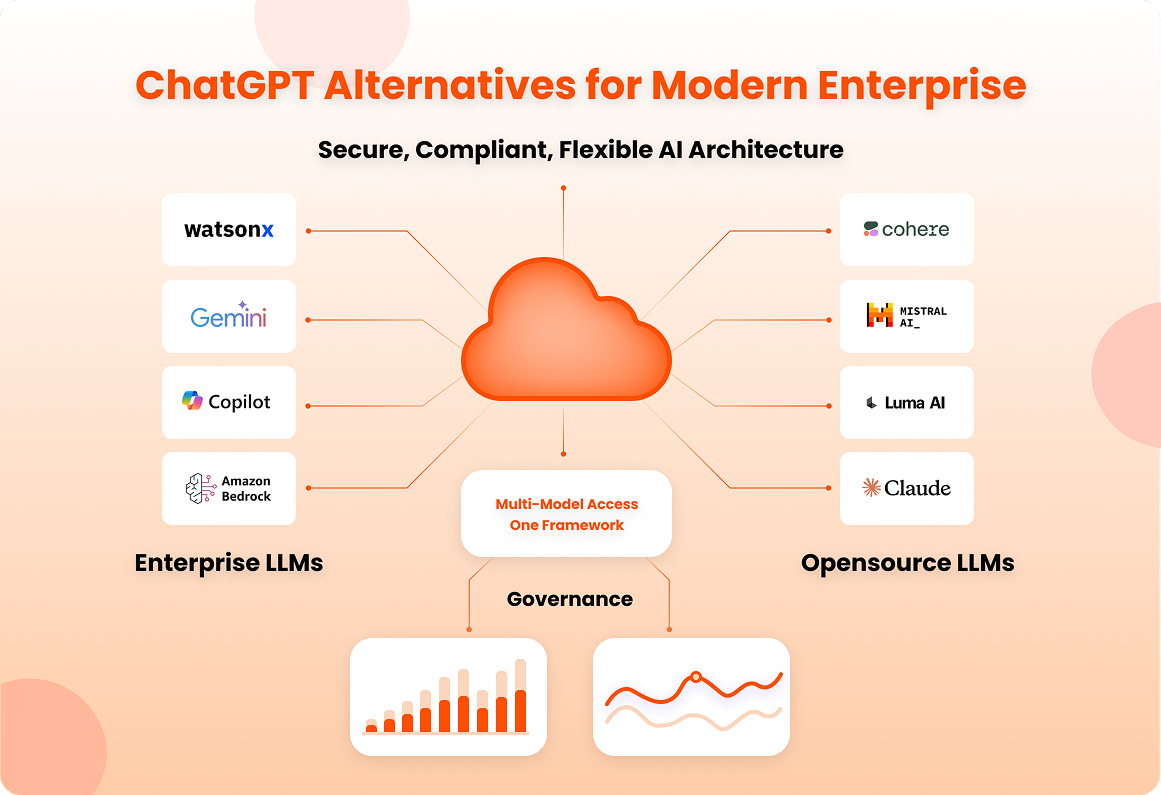
ChatGPT Alternatives for Modern Enterprise
ChatGPT has become the face of modern generative AI—and for good reason. It’s
fast, intuitive, and exceptionally capable across a range of tasks—from drafting emails and
summarizing documents to assisting with coding and customer queries. For many individuals and
small teams, it’s the go-to productivity tool.
But when it comes to enterprise-wide adoption, things become more complex.
The enterprise version of ChatGPT is powerful- but it comes with a high price
tag. For large organizations, extending that license to every team or department quickly becomes
cost prohibitive. And while the free version offers impressive capabilities, it lacks the
security, compliance, and customization that regulated industries demand.
This raises an important question for CIOs and tech leaders:
What if you could access the same model and other leading LLMs in a
more flexible, secure, and cost-optimized way?
That’s exactly what modern AI orchestration platforms and GPT alternatives enable. By
integrating models like GPT-4, Claude, Gemini, and open-source LLMs within a secure, compliant
framework, enterprises can adopt a use-case-first AI strategy—choosing the right model for the
right job.
In this article, we’ll explore the evolving landscape of ChatGPT alternatives—not as
replacements, but as extensions and enhancements to your enterprise AI strategy. From cost
efficiency to deployment control, we’ll cover how to build a balanced, scalable GenAI
architecture that puts your business needs—not just the brand name—at the center.
The Expanding Landscape: Top ChatGPT Alternatives in 2025
With the explosion of generative AI use cases, enterprises are no longer
restricted to a single model like ChatGPT. Instead, they are building a multi-model toolkit
tailored to departments, regulatory needs, and specific tasks. From proprietary systems by tech
giants to agile open-source models, today’s market offers a wide array of GPT alternatives that
bring performance variety, affordability, and flexibility.
Here’s a snapshot of notable players making waves across sectors:
| AI Tool | Key Strengths | Ideal Use Cases |
|---|---|---|
| Microsoft Copilot Studio | Native Office 365 integration, enterprise-grade security | Admin tasks, writing, project management |
| Claude | Ethical reasoning, long context memory | Legal, HR, policy-heavy workflows |
| Gemini | Strong in research, code suggestions, real-time search | Development, data analysis, research |
| Perplexity AI | Live web grounding, direct answers | Knowledge work, customer service, FAQs |
| Amazon Bedrock | Multi-model access, scalable backend integration | Automation, backend services, app integration |
| IBM watsonx | Domain-specific AI pipelines, language model tuning | Finance, healthcare, and analytics teams |
| Open-source LLMs (Mistral, LLaMa, etc.) | Customizable, on-prem deployable | Offline deployments and secure enterprise zones |
| Vertical copilots (e.g., Salesforce, SAP) | Industry or function specific AI assistants | Pharma, legal, customer support |
No two models are identical. Some prioritize long-form reasoning, others offer real-time
facts
or multilingual fluency. Organizations must choose GPT alternatives not just for language
output, but based on infrastructure, deployment needs, and integration paths.
Enterprises today are blending AI models across internal tools, client-facing apps, and data
pipelines. A finance team might lean on Claude, while product development uses Copilot.
Meanwhile, open-source LLMs may power internal document summarization securely behind
firewalls.
Why Different Teams Choose Different ChatGPT Alternative
Enterprises don’t just vary in size—they also differ in structure, workflows, and data sensitivity. This creates diverse requirements for generative AI tools across departments. A one-size-fits-all LLM cannot address the specific demands of legal, HR, design, or finance teams.
 Legal departments
Often prefer tools that emphasize careful reasoning and long-form document synthesis.
 Finance and operations
Lean on tools with structure-aware outputs and factual accuracy.
 HR teams
Need tone-sensitive generation for communication, internal policies, and onboarding content.
 Design and marketing
Value AI that helps with ideation, creative content, and iteration—Gemini and Perplexity stand out here.
 IT teams
May prefer models that integrate well into workflows, automate tickets, and support scripting—like Microsoft Copilot Studio or Amazon Bedrock.
Another key factor is reasoning style. Some tools are more verbose and
deliberative
(like
Claude), while others are brief and action-oriented (like Copilot). Departments may choose
based
on which tone and interaction model align best with their daily tasks.
Additionally, integration matters. A model that plugs easily into existing
platforms like Slack,
Salesforce, or JIRA gains traction faster. The rise of internal copilots shows how different
business units prefer AI tailored to their toolchain, not forced through a generic
interface.
Memory and session persistence also influence adoption. For long-running
projects
or repeat
interactions, tools with memory features may suit product or legal workflows, while
task-based
use cases may not require it.
Ultimately, organizations find themselves running multiple models in
parallel—not
out of
indecision, but necessity. This mix-model reality ensures that every team gets what it needs
to
move faster, work smarter, and reduce friction in day-to-day processes.
ChatGPT Is Exceptional—But You Deserve More Than One Option
There’s no denying the impact ChatGPT has had on the workplace. It’s
intuitive,
lightning-fast, and capable of everything from summarizing PDFs to drafting product pitches.
For
individuals and small teams, it’s a game changer.
But when it comes to scaling that same power across an entire enterprise, ChatGPT
Enterprise—while secure and capable—comes with a steep price tag. Seat-based licensing,
siloed
usage, and limited integration options can make full deployment complex and expensive.
So the question becomes:
What if you could get access to ChatGPT’s power—and other leading models—in a secure, compliant, and cost-optimized way that fits your entire tech stack?
Introducing a Secure, Audit-Ready ChatGPT Alternative
Most AI tools can generate high-quality outputs. But very few offer the
governance, visibility, and flexibility that enterprises need at scale. That’s why
forward-looking organizations are turning to an LLM Orchestrator.
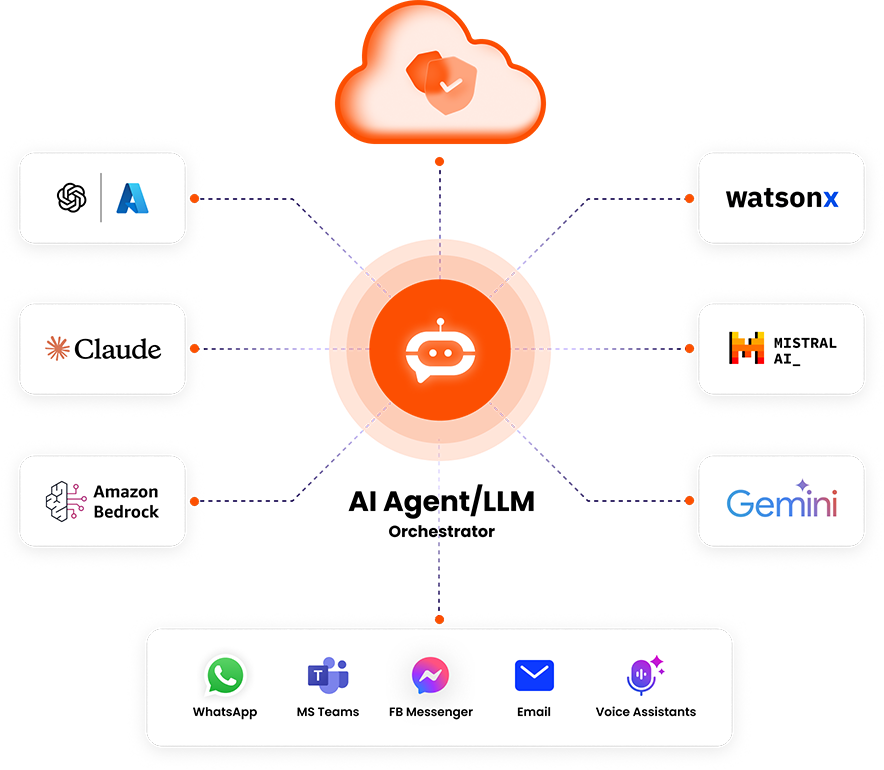
An LLM Orchestrator is not just another chatbot platform—it’s an enterprise-grade control
layer
that gives your teams access to ChatGPT and other top-tier LLMs (like Claude,
Google Gemini, IBM
watsonx, Microsoft Copilot Studio, and Amazon Bedrock) through a single, governed
interface.
This doesn’t replace ChatGPT; it includes it. The same GPT models – hosted securely
on
Azure are
available within the orchestrator. The difference? You decide how, when, and
where
each model is
used—based on cost, performance, and compliance.
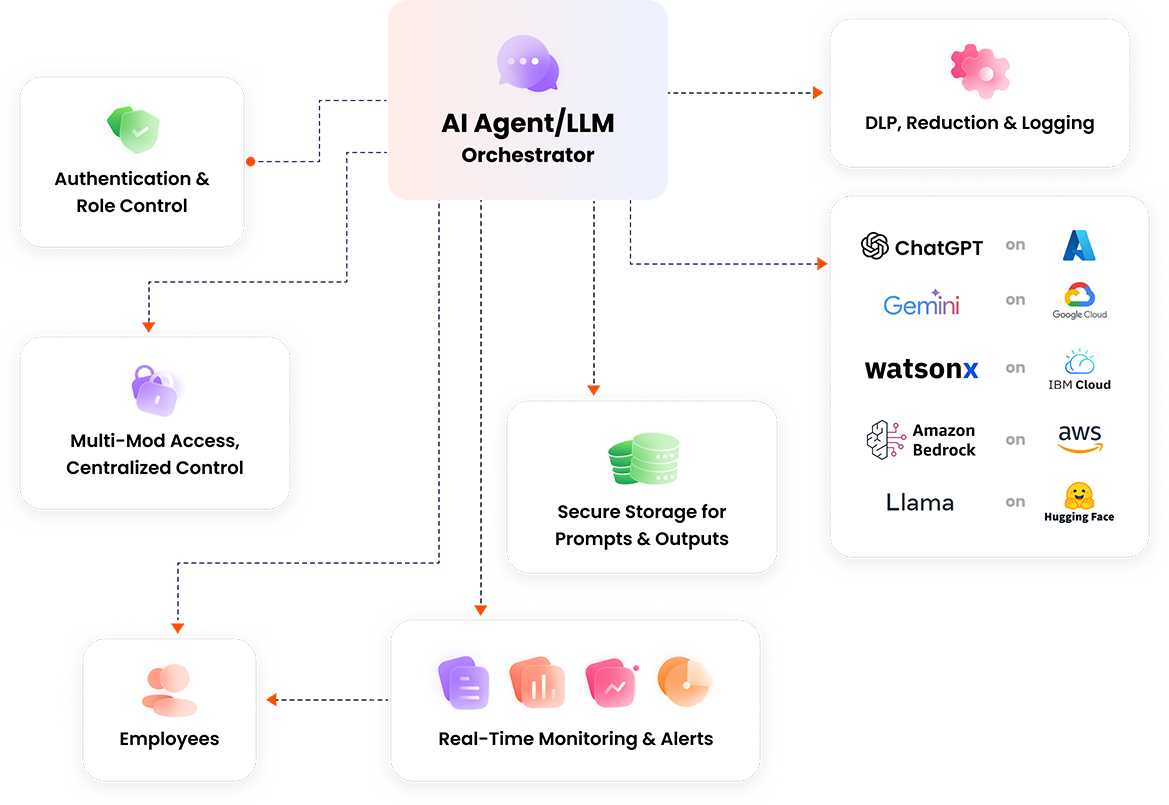
With an LLM Orchestrator, you can:
-
 Use ChatGPT alongside other LLMs depending on use case or
department
Use ChatGPT alongside other LLMs depending on use case or
department
-
Route sensitive tasks to private, hosted models (like watsonx , Copilot or Bedrock)
-
Set granular access controls, usage limits, and audit policies
-
Deploy AI across all your environments – internal tools, portals, CRMs—not just
ChatGPT’s
interface
In other words, you don’t have to choose between ChatGPT and control—you can have both. The orchestrator simply brings choice, governance, and cost-efficiency to the AI capabilities you already trust.
Botonomics: Smarter Cost Control for Scalable ChatGPT Alternative
While tools like ChatGPT Enterprise offer premium performance, they often
come
with fixed seat-based pricing, siloed deployment, and minimal oversight on actual usage.
Over
time, that leads to bloated costs, tool redundancy, and unpredictable AI spend. That’s where
Botonomics comes in—a smarter framework for managing cost, control, and access across your
enterprise’s AI ecosystem.
At the center of Botonomics is the LLM Orchestrator – a single control layer that connects
your
teams to ChatGPT (via Azure), Claude, Gemini, Amazon Bedrock, watsonx, Cohere, and even
open-source models, all governed from one interface.
 One interface, many models
Employees can use the best model for the job, without switching tools or juggling logins.
 Real-Time Cost and Usage Analytics
Track AI consumption across users, departments, and models. Get live dashboards, usage audits, and detailed reporting to support IT, finance, procurement, and compliance functions.
 Risk-based redaction
Automatically remove or mask sensitive content in prompts and outputs depending on usage context.
 Token-Based, Usage-Aligned Pricing
With token-based pricing, each model is accessed via API, and you only pay for what’s used—based on tokens consumed per request. This eliminates the need for fixed user licenses and enables precise cost control across tasks, teams, and models. Lighter workloads can use lower-cost models, while premium LLMs are reserved for high-impact use cases.
 Unified logging
Maintain immutable logs of every interaction across all LLMs for audit-readiness.
 Shadow AI control
Bring unauthorized tool usage under a governed platform.
The result?
You get the same world-class model capabilities as ChatGPT Enterprise—but with broader model
access, deeper governance, and dramatically better economics.
This is what makes orchestrated AI different. This is intelligent Botonomics – AI that grows
with your organization, not against your budget.
Compliance from Day One: Regulations, Not Restrictions
As generative AI expands within regulated industries like healthcare,
finance, legal, and government, enterprises are under growing pressure to ensure their use of AI
complies with global data and privacy standards. The goal isn’t to restrict usage—but to enable
it
responsibly, with the right safeguards.
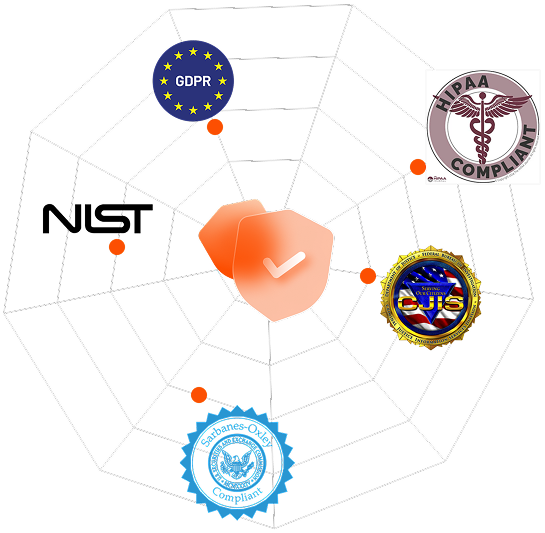
An enterprise-grade Generative AI platform must support the following standards:
-
GDPR (General Data Protection Regulation) – Controls over personal data
handling
and user privacy.
-
HIPAA (Health Insurance Portability and Accountability Act) – Especially critical
for
healthcare-related prompts or records.
-
SOX and SEC 17a-4 – Key for financial institutions that must retain auditable
records.
-
CJIS (Criminal Justice Information Services) – Relevant for law enforcement and
judicial
organizations.
-
NIST frameworks – Aligns with cybersecurity and digital trust protocols.
What does compliance readiness look like in Generative AI?
 Immutable logs and prompt history:
Every interaction must be traceable, archived, and exportable on demand.
Immutable logs and prompt history:
Every interaction must be traceable, archived, and exportable on demand.
 On-demand access logs:
Prove who accessed what, and when—crucial for audits or incident reviews.
On-demand access logs:
Prove who accessed what, and when—crucial for audits or incident reviews.
 Role-aware data masking:
Automatically redact or filter outputs based on user-level or sensitivity tags.
Role-aware data masking:
Automatically redact or filter outputs based on user-level or sensitivity tags.
 Real-time content alerts:
Flag risky inputs or outputs to prevent leakage before it happens.
Real-time content alerts:
Flag risky inputs or outputs to prevent leakage before it happens.
Compliance Console
Immutable Logs & Prompt History
| User ID | AI Prompt | Session ID |
|---|---|---|
| admin_22 | Access audit trail for user_103. | sess_4c9a1a |
| user_103 | Summarize yesterday’s customer feedback. | sess_921bf8 |
Realtime Content Alerts
| User ID | AI Prompt | Risk Detected |
|---|---|---|
| intern_202 | Give me patient history from ID #44837 | HIPAA Violation |

Severity: High Status: Blocked |
||
Access Logs Dashboard
| User ID | AI Prompt | Data Sensitivity | Timestamp (UTC) |
|---|---|---|---|
| analyst_205 | Show internal quarterly revenue breakdown. | Confidential | 2025-08-06 10:12:45 |
| legal_team01 | List AI responses related to case #247. | Restricted Legal | 2025-08-06 10:05:29 |
Roll Aware Data Masking
| User Role | Masking Type |
|---|---|
| HR Manager | No Masking |
| Intern | No Access |
| Admin/Staff | Medical Info |
Rather than placing restrictive barriers around AI, this approach gives legal, risk, and IT
teams peace of mind—while allowing business units to innovate freely.
A compliance-by-design strategy future-proofs Generative AI adoption by ensuring
organizations
remain in control even as regulations evolve.
One Dashboard for Generative AI Oversight Across the Enterprise
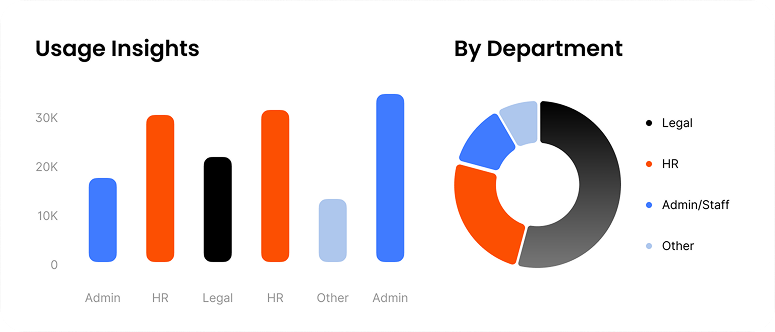
Deploying multiple Generative AI tools across departments can lead to scattered visibility. Enterprises need a centralized dashboard to monitor usage, ensure policy alignment, and simplify governance.
One Dashboard
Alert
-
 Policy Breach Detected
-
Sensitive Data Flagged
-
Legal Data Breach
-
Financial Fraud Detected
Audit Ready Reports |
||
|---|---|---|
| User ID | AI Prompt | Timestamp (UTC) |
| analyst_205 | Show internal quarterly revenue breakdown. | 2025-08-06 10:12:45 |
| legal_team01 | List AI responses related to case #247. | 2025-08-06 10:05:29 |
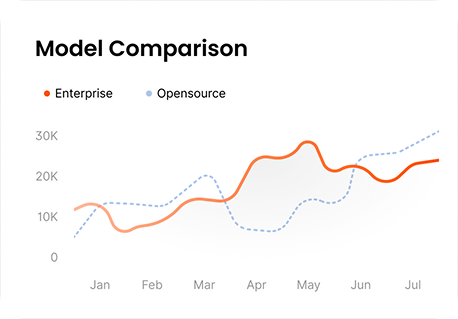
A smart oversight dashboard can offer:
-
Usage insights by user, team, and model
-
Model comparisons for productivity tracking
-
Audit-ready reports for legal and compliance needs
-
Alerts on anomalies or policy breaches
-
Tags for sensitive data and key session types
It’s not about restricting teams—it’s about enabling smarter, secure scaling of Generative AI across the business with unified visibility.
Built to Plug Into the Tools You Already Use
For AI to be effective, it needs to work where your teams are already operating. A practical ChatGPT alternative should plug into your existing software stack without disruption.
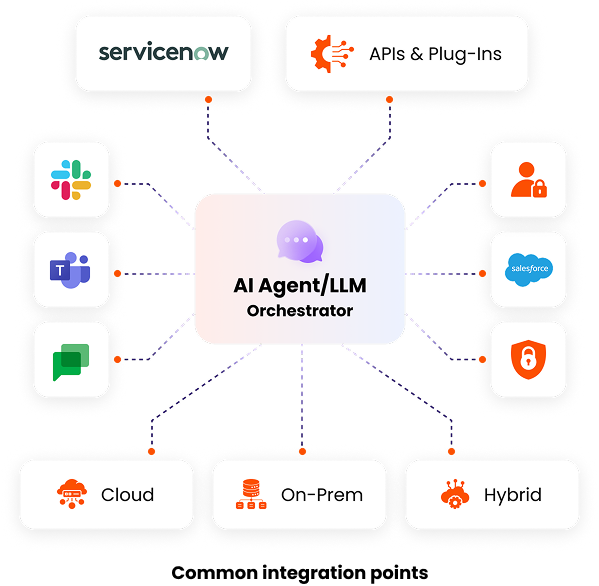
Common integration points include:
-
Tools like Slack, Teams, and Google Chat
-
CRMs and IT platforms like Salesforce or ServiceNow
-
Knowledge portals and internal systems
An LLM Orchestrator supports this by offering API connectors and plug-ins and can sync with IAM systems like SAML and LDAP for secure, role-based access.
-
Deployment options
Cloud, hybrid, or fully on-prem—based on your infrastructure needs.
A seamless fit into your workflow is what makes a GPT alternative truly usable.
Frequently Asked Questions (FAQs)
Yes, Especially if you use a platform (LLM Orchestrator) that centralizes logging, retention, and access control across models. This helps maintain compliance with internal and external standards.
Use an LLM Orchestrator that offers redaction, audit trails, and role-based restrictions. Ensure prompts and responses are logged, and DLP policies are in place.
Yes. Platforms built to orchestrate multiple LLMs can interface with Copilot, Claude, Gemini, and others- enabling centralized governance.
Through dashboards that log token usage per model and per team. Usage-based pricing ensures you only pay for what you consume.
If you’re evaluating how to move forward
- Try the Orchestrator Demo – Get hands-on with a unified Generative AI control panel
- Get Your Generative AI Governance Plan – Tailored to your industry and compliance needs
- Talk to an AI Compliance Specialist – For deeper insight on secure deployments